
OTA visibility is how prominently your property appears when a guest opens Booking.com, MakeMyTrip, Agoda, Goibibo, or Expedia and searches for a hotel. Position 1 gets seen by almost every guest who searches. Position 18 gets seen by almost none. That gap is not a mystery or a black box. It is driven by a small set of measurable signals that most hotels can improve without spending anything.
Unlike Google rankings, OTA visibility has nothing to do with backlinks, domain authority, or content structure. It runs entirely on how your property performs on the platform itself: listing quality, pricing, availability, review score, and booking behaviour. A 20-room property with no marketing budget can rank above a 200-room chain hotel if the signals are better. That is both the challenge and the opportunity.
This is a quick guide of Hotel Listing Optimization.
What Is OTA Visibility?
OTA (Online Travel Agency) is any third-party booking platform that sells hotel rooms in exchange for a commission. The platform shows your property to guests, handles the transaction, and charges 12 to 22% of the booking value depending on the programme and property type.
The five platforms that matter most for Indian hotels are not equal in every market. A business hotel in Bengaluru's Whitefield corridor generates most of its OTA revenue from Booking.com and Expedia. A family resort in Coorg pulls primarily from MakeMyTrip and Goibibo. Treating all five as one channel is one of the more expensive assumptions in hotel distribution.
| Platform | Primary Guest Profile | Strongest In | Typical Commission | Guide |
|---|---|---|---|---|
| Booking.com | International travellers, urban Indian business | Metro cities, airport hotels, business districts | 15–18% | Booking.com Strategy Guide |
| MakeMyTrip | Domestic Indian leisure and family | Tier-2 and tier-3 leisure, hill stations, pilgrimage routes | 12–18% | MakeMyTrip Optimization Guide |
| Agoda | International, Southeast Asian, NRI | Goa, Rajasthan, heritage properties, beach destinations | 15–18% | Agoda Optimization Guide |
| Goibibo | Domestic Indian, mobile-first, younger travellers | Significant overlap with MakeMyTrip; same ownership group | 12–15% | Goibibo Strategy Guide |
| Expedia | International business, corporate travel | Metro cities, conference hotels, international chains | 18–22% | Expedia Strategy Guide |
Why OTA Visibility Matters
Indian hotels pull 40 to 65% of their online bookings through OTAs, depending on property type. For a 35-room business hotel in Coimbatore, that number sits closer to 60. When visibility drops, occupancy follows, usually with a three to five week lag before it shows up in the revenue numbers.
The math is direct. Lower visibility equals fewer impressions. Fewer impressions equals fewer clicks. Fewer clicks equals fewer bookings. Fewer bookings weakens conversion rate, which is itself a ranking signal, so the algorithm shows the property even less. The spiral runs in both directions and moves faster going down than coming back up.
Two metrics carry most of the weight here. ADR (Average Daily Rate) is total room revenue divided by rooms sold. RevPAR (Revenue Per Available Room) multiplies occupancy by ADR, capturing both how full the hotel is and what rate it is achieving. When visibility drops, most hotels respond by cutting rates. That protects occupancy short-term but pulls ADR down and makes RevPAR recovery harder even after visibility improves. Recovering a rate position takes three to six months of holding firm. Most hotels don't make it that far before cutting again.
How OTA Ranking Works
OTA platforms publish fragments of their ranking methodology. Never the full picture. But the core logic is consistent across all of them: show guests the properties most likely to produce a confirmed, completed booking. Not the cheapest. Not the most popular in isolation. The ones most likely to convert without cancellation.
The algorithm is a conversion prediction engine. It looks at how your property has performed historically, what the listing quality looks like right now, how prices compare to similar properties, and what availability looks like for the search dates. It then estimates the probability that showing your property to this guest produces a stayed booking. That probability score, combined with some platform-specific adjustments for promotions and programme participation, determines where you appear.
Booking pace is the rate at which rooms fill relative to historical patterns for the same dates. Some OTAs use booking pace as a demand-smoothing signal, temporarily boosting visibility for underselling properties. That is a safety net, not a strategy. Properties that rely on it have weak organic signals that the algorithm stops accommodating over time.
| Platform | Transparency Level | What They Share | Guide |
|---|---|---|---|
| Booking.com | High | Content score, review score, visibility metrics in partner dashboard | Booking.com Ranking Guide |
| MakeMyTrip | Medium | Visibility score, partner performance dashboard, content completion % | MakeMyTrip Ranking Guide |
| Agoda | Medium | YCS (Your Country Score) dashboard, property score breakdown | Agoda Ranking Guide |
| Goibibo | Low | Basic performance metrics, limited algorithm transparency | Goibibo Strategy Guide |
| Expedia | Medium | Partner Central dashboards, listing quality score | Expedia Strategy Guide |
The practical implication: gaming one signal doesn't pull the others with it. Strong pricing with a high cancellation rate still loses. Perfect photos with half the month closed still rank poorly. All the signals interact and the algorithm reads them together.
The 10-Factor Visibility Framework
Ten signals feed into OTA ranking algorithms across all major platforms. They don't operate independently and they're not weighted equally, but every one of them affects position. The table below shows all ten at a glance. Each gets its own explanation below.
| # | Factor | What the Algorithm Measures | Fix Priority | Time to Impact |
|---|---|---|---|---|
| 1 | Listing Quality | Content score, photos, amenity tags, description completeness | High | 2–4 weeks |
| 2 | Rate Competitiveness | Your rate vs comp set on the same platform | High | 1–2 weeks |
| 3 | Availability | Open inventory depth, booking window coverage, date restrictions | High | Immediate |
| 4 | Review Performance | Score, volume, recency, response rate | High | 3–6 months |
| 5 | Booking Conversion | % of listing views that result in a booking | Medium | 4–8 weeks |
| 6 | Cancellation Rate | % of bookings cancelled before arrival | High | 3–6 months |
| 7 | Guest Experience | Post-stay review consistency, rebook signals | Medium | Ongoing |
| 8 | Platform Trust | Partner tenure, parity compliance, response speed | Low (long-term) | 6–12 months |
| 9 | Promotions | Active deals, programme participation (Genius etc.) | Low (short-term) | Immediate but temporary |
| 10 | Seasonality | Demand timing, inventory prep before peaks | Medium | Cyclical |
1. Listing Quality
A listing with three photos from 2019, a room description that still mentions "complimentary newspaper," and a facilities section that's 60% blank will not compete regardless of price. Every major OTA uses a content score. Booking.com publishes it directly. A property at 78% content score doesn't appear in the same filtered searches as one at 95%.
Photos carry the most weight within listing quality. The first six images a guest sees determine whether they click or keep scrolling. Not the description. Not the amenities list. The photos. Dark, outdated images that don't show what the room actually looks like cannot be fixed by discounting.
Content score below 85% is the first fix nearly every time. Higher return than any rate change, and it's the fix that gets deferred most consistently. New photos if current ones are over two years old. All amenity tags completed. Room descriptions that describe what the room actually looks like, not what the hotel wants it to sound like.
2. Rate Competitiveness
The platform knows what every comparable property in your market is charging. If rates are consistently 20 to 25% above comp set without the listing quality or review score to justify it, the algorithm assumes conversion will be low and deprioritises the listing. This doesn't mean undercutting everyone. It means the rate needs to be defensible given what the property is offering.
Comp set is the group of hotels the OTA benchmarks your property against for competitive pricing and performance comparison. On most platforms it's either self-selected, algorithm-assigned, or both. Identifying your actual comp set on each platform is the first step in any rate competitiveness audit.
3. Availability
Closed dates, minimum stay restrictions, and advance purchase cutoffs all damage visibility, sometimes dramatically. An OTA can't show what it can't sell. And the damage isn't just on the closed dates themselves: closing two nights in a seven-night window removes the property from every multi-night search that spans those dates.
- 1 Check your booking windowAre rates loaded 60 to 90 days out? Properties managing only a 30-day rolling window are invisible to flexible-date guests, who convert at some of the highest rates on the platform.
- 2 Review active restrictionsLog into each OTA extranet directly. Look for MinLOS, stop-sell, or CTA restrictions that are still active without a current reason. These accumulate and nobody removes them.
- 3 Cross-check OTA against PMSEvery Monday, compare live OTA availability against what the PMS shows. Any gap is a sync issue that is actively harming ranking.
4. Review Performance
Review score matters, but not just the number. A property with 400 reviews at 8.5 ranks better than one with 40 reviews at 8.8. Recency matters because a score built on three-year-old reviews tells the algorithm less than one built on the last 90 days. Response rate matters because platforms track whether properties engage with feedback.
The response rate problem is more common than it sounds. Some teams respond to every positive review with the same 40 words and ignore negative ones entirely. The platform distinguishes between substantive responses and templated ones. A 100% response rate built on copy-paste text barely moves the needle.
5. Booking Conversion
Conversion rate is how often guests who click your listing actually complete a booking. The OTA tracks this per property and factors it into ranking. A listing with strong impressions but weak conversion sends the signal that something is wrong: price, photos, reviews, or some combination. The algorithm responds by showing the listing less.
Running promotions to fix a conversion problem. Promotions buy impressions. If conversion stays low, the property just pays more to confirm what the algorithm already knows. Fix the listing first. Then consider promotions.
6. Cancellation Rate
Every cancellation is a failed booking from the platform's perspective. High cancellation rates, whether from guests abusing flexible policies or from the property cancelling outright, tell the algorithm that placing demand here is risky.
Rate parity means maintaining the same room rates across all distribution channels. Most OTA contracts include parity clauses. Offering lower rates on your website or a competitor OTA without disclosure can trigger ranking penalties on the platforms that enforce these clauses.
Getting cancellation rate from 35% back to below 15% and having the algorithm respond to that improvement typically takes three to six months of consistent performance. There is no shortcut. Properties that try to accelerate recovery through rate manipulation usually extend the timeline rather than shorten it.
7. Guest Experience
Post-stay behaviour feeds directly into review score and recency. But some platforms also track whether guests search again after a stay, whether they rebook the same property, and whether they complete their stay without reporting issues. Properties that consistently deliver on listing promises maintain review consistency over time. Properties that oversell what they have get review volatility, and score swings are what the algorithm penalises most.
8. Platform Trust
Platform trust is a slow-building signal: how quickly the team responds to booking enquiries, how long the property has been an active partner, whether there have been parity violations or property-initiated cancellations. Newer listings get a temporary visibility boost on most platforms, a sort of honeymoon period, then settle into ranking based on actual performance. Properties with two or three years of consistent activity have a baseline trust advantage over new entrants with similar scores.
9. Promotions
Early Bird rates, Last Minute deals, Genius discounts, weekend specials: these create temporary visibility boosts because platforms promote participating listings in filtered views. They are not a substitute for organic ranking. Properties that run continuous promotions for twelve months to maintain top-5 visibility, then pull them back for margin reasons, often drop to position 14 within three weeks because the promotions were doing all the work.
Use promotions to support good underlying positioning, not to replace it. A property with strong listing quality, competitive rates, and a healthy review score uses promotions selectively to capture demand on soft dates. A property with weak fundamentals using promotions year-round is paying more and more to stay where it is, not improving where it is.
10. Seasonality
Algorithms adjust to demand. A hotel ranking 6th during shoulder season may rank 3rd during Diwali because rate positioning looks better relative to comp set when market rates are rising. The reverse also happens: strong supply during peak means better-performing properties compete harder and marginal listings get pushed further down.
Properties that open availability and activate promotions before peak demand windows tend to capture early-window bookings. Early bookings accumulate conversion data before the main demand arrives, which reinforces ranking going into the high-demand period. Preparation compounds here in a way that reactive management does not.
Common Visibility Problems
The problems below come up repeatedly across Indian hotel markets. Not theoretical. These are what actually show up when running OTA audits.
| Problem | What It Actually Looks Like | Root Cause | Fix |
|---|---|---|---|
| Incomplete listing | Content score below 80%. Missing amenity tags. Three to five photos. Description last updated in 2021. | No ownership of listing maintenance. Treated as a one-time setup task at onboarding. | Full listing audit, photo refresh, amenity tag completion by platform. Listing Optimisation Guide. |
| Overpriced vs comp set | Rates 20 to 30% above market. No corresponding quality differentiation. Conversion below 2%. | Rates set once and left. Comp set not checked in months. | Weekly comp set rate review. Dynamic Pricing Guide covers the rate ladder approach by room type and lead time. |
| Availability gaps | Closed-out dates mid-week. Minimum stay restrictions not adjusted for off-peak. Only 30-day rolling inventory loaded. | Inventory managed reactively. Restrictions applied broadly and never removed. | Open inventory 90 days out. Remove blanket restrictions. Audit multi-night search exclusions weekly. |
| High cancellation rate | Cancellation rate above 20%. Spike after free-cancellation policy was set too loosely. | Policy designed for bookings, not for completion. No segmentation by lead time. | Tiered cancellation policy by booking window. Non-refundable rate options for short lead times. |
| Low review velocity | Review count dropped from 80 per month to 12 per month. Score based on three-year-old data. | Front desk stopped following up at checkout. No post-stay email trigger. | Systematic post-stay review request. Reputation Management Guide covers response rate recovery across platforms. |
| PMS sync errors | Availability gaps appearing on OTAs that don't exist in the PMS. Occasional double-bookings. | Channel manager integration running on manual updates or broken API connection. | Channel Manager Guide: cross-check live OTA availability against PMS every Monday as a baseline audit. |
The GM notices occupancy is soft. Calls the platform. Gets told nothing is wrong. Spends three weeks assuming it's a market issue. An actual audit, pulling content score, conversion rate, cancellation rate, and availability data by platform, usually identifies the real problem in an afternoon.
RevPAR decline lags visibility decline by three to five weeks. By the time the revenue dashboard looks alarming, the underlying visibility problem has usually been building for two months. Weekly impression tracking closes that gap.
How to Improve OTA Visibility
There is no shortcut that holds. Properties with strong, consistent OTA visibility run the same cycle every month. The six stages below aren't sequential in the sense that you complete one and move on. They're a loop. Audit, fix what the audit found, audit again.
Audit Your Current Position
Pull content score, conversion rate, cancellation rate, review score, response rate, and availability gaps across every active platform. Log into each partner dashboard directly, not just the channel manager summary. The channel manager shows what you've pushed. The OTA dashboard shows what the platform is actually displaying and how guests are responding.
This takes about two to three hours per property if the data is accessible, longer if you're working across five logins that haven't been touched since the last revenue manager left.
Fix the Listing Before Touching Rates
Content score below 85% means the listing is the first fix, not the rate. New photos if current ones are over two years old. All amenity tags completed. Room descriptions that describe what the room actually looks like rather than what the hotel wants it to sound like. This is consistently the highest-return fix in OTA visibility work and consistently the one that gets deferred.
Optimise Pricing Against Comp Set
Compare rates against the four or five properties each OTA actually benchmarks against, not against your own historical rates. A rate that felt right six months ago may be 18% above market because three competitors repositioned. This audit takes about 90 minutes done across all platforms simultaneously using a spreadsheet that pulls each platform's displayed rates side by side.
Rate optimisation isn't just lowering prices. It's building the right rate ladder across room types, lead times, and day of week.
Build a Review Response Habit
Not a policy. A habit. A response written specifically to what the guest wrote, across every platform, within 48 hours. Positive reviews get a response that references something specific from the review. Negative reviews get a response that acknowledges the issue, explains what changed, and invites the guest back without being sycophantic about it.
This is the step most teams set up, run for two months, then quietly abandon when things get busy. The drop in response rate shows up in ranking data about six weeks later and the cause is rarely obvious.
Track Conversion Rate by Platform
If Agoda sends strong impression volume but converts at 1.8% while MakeMyTrip converts at 4.4%, the problem is the Agoda listing specifically, not the hotel. Tracking blended conversion across all OTAs hides this. Platform-level conversion tracking shows exactly which listing needs work and which is already performing.
Repeat Monthly, Without Exception
This process gets set up properly in month one, runs through months two and three, then stops when someone gets busy. Six months later the GM is asking why occupancy is soft. Monthly is the minimum frequency at which OTA visibility problems get caught early enough to fix before they compound. Quarterly is too slow. Annual is crisis management.
Metrics to Track
Track these by platform, not as blended totals. A blended average hides the specific platform where the problem lives. RevPAR decline typically lags visibility decline by three to five weeks. By the time the revenue dashboard looks alarming, the underlying visibility problem has usually been building for two months. Weekly impression tracking is what closes that gap.
| Metric | What It Measures | India Benchmark | Frequency | Guide |
|---|---|---|---|---|
| Impressions | How often the listing appears in search results | Track week-on-week trend, not absolute number | Weekly | |
| CTR | % of impressions that result in a listing click | Varies by city and category | Weekly | |
| Conversion Rate | % of listing views that become bookings | 3–6% Booking.com; higher on MMT domestic | Weekly | |
| ADR (OTA-specific) | Average rate from OTA bookings only | Track vs comp set and vs direct booking ADR | Weekly | ADR Guide |
| RevPAR | Occupancy × ADR: full revenue efficiency picture | Compare against MPI and RGI for market context | Weekly | RevPAR Guide |
| GOPPAR | Gross operating profit per available room after distribution costs | Tracks true profitability net of OTA commissions | Monthly | GOPPAR Guide |
| Review Score | Guest-rated quality score per platform | 8.0+ for Booking.com competitive viability | Weekly | OTA Review Score Guide |
| Review Response Rate | % of reviews with a property response | Target 80%+ across all platforms | Weekly | |
| Cancellation Rate | % of bookings cancelled before arrival | Keep below 15% on all channels | Weekly | |
| Booking Pace | Rate of bookings vs historical pattern for same dates | Compare same period, same dates, year-over-year | Weekly |
Technology That Supports OTA Visibility
Four tools do most of the work. Not every property needs all four. The most common technology mistake isn't buying the wrong tool. It's buying the right tool and not integrating it properly. A channel manager pushing stale rates because the PMS sync is misconfigured actively harms OTA ranking by creating availability errors the algorithm reads as unavailability. Before evaluating new software, audit the current stack's integration accuracy first.
| Tool | What It Does | When You Need It | Without It | Guide |
|---|---|---|---|---|
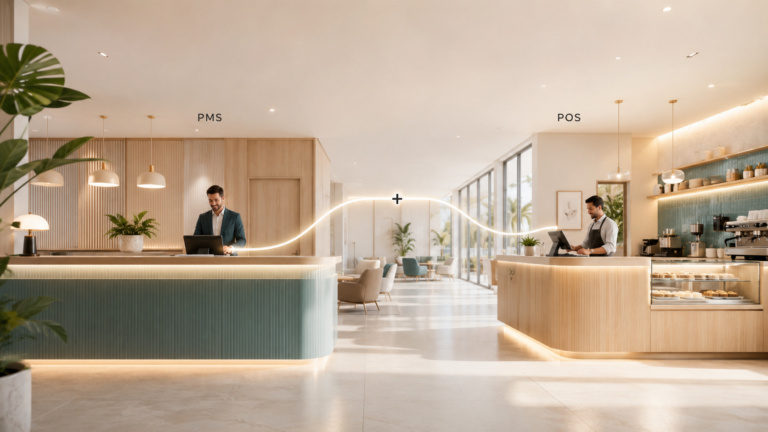
| PMS | Central database for reservations, inventory, and rates | Every property, regardless of size | Manual tracking, errors, no reliable data foundation | |
| Channel Manager | Syncs PMS inventory and rates to all OTAs in real time | As soon as you're active on two or more OTAs | Manual updates, availability gaps, double-bookings, damaged ranking | Channel Manager Guide |
| RMS | Automated or assisted rate recommendations based on demand signals | 50+ rooms, multiple room types, significant seasonal variation | Rates set manually, usually lagging the market by days or weeks | |
| Reputation Software | Aggregates reviews across platforms, tracks response rate and score trends | Active on 3+ platforms with 50+ reviews per month | Manual platform-by-platform monitoring. Easy to miss responses. | Reputation Management Guide |
Common Myths
Price competitiveness matters, but the algorithm is predicting bookings, not surfacing the cheapest option. A property priced 15% above comp set with strong conversion will outrank one priced below market with weak conversion, because the platform cares about completed transactions. See the Dynamic Pricing Guide for the actual relationship between rate and ranking.
Genius on Booking.com, and equivalent programmes on other platforms, give a visibility boost to properties that already have strong review scores and conversion rates. If underlying listing quality and review performance are weak, programme participation makes the problem more expensive without fixing it.
Promotions create temporary visibility spikes. They don't build organic ranking. Properties that run continuous promotions to maintain position and then pull them back for margin reasons typically drop to where their organic signals actually put them, usually 10 to 15 positions lower. Using promotions to support good underlying positioning is reasonable. Using them to replace it is expensive and fragile.
Reviews matter. But a property with a 9.0 score and availability closed half the month ranks below one with an 8.3 and open inventory. Availability and conversion rate carry more algorithmic weight than most hotels expect. Review score is the most visible signal so it gets the most attention. That doesn't make it the most impactful thing to fix first.
They're not. A hotel can rank on page one of Google for "boutique hotel Udaipur" and sit on page four of Booking.com at the same time. OTA visibility runs entirely on on-platform performance data. External SEO doesn't feed into it. The Hotel SEO Guide and this guide address different problems with different fixes.
Frequently Asked Questions
Want this set up for your property?
We'll review this against your hotel's current setup, free of charge.