
What is OTA Distribution Strategy?
OTA distribution strategy means deciding which websites sell your hotel rooms, and how much you pay them for it.
That is the whole idea.
Most hotels never sit down and decide this properly. Someone lists the hotel on MakeMyTrip because that is what everyone does. Goibibo gets added a few months later. Booking.com joins after a guest says they could not find the hotel anywhere else. Nobody planned it. It just built up.
That is not a strategy. That is how things accumulated.
What OTA Means
OTA stands for Online Travel Agency. A website where guests search for hotels and book a room. MakeMyTrip, Goibibo, Booking.com, Agoda, EaseMyTrip are all OTAs.
The guest books through the website. The website takes a cut. The hotel keeps whatever is left.
Who Owns Most of It in India
MakeMyTrip and Goibibo are owned by the same company. Most hotel owners do not know that. Together they handle somewhere around 50 to 60 out of every 100 online hotel bookings in India.
Booking.com is stronger with guests from outside India. Agoda holds a solid position with Southeast Asian travellers. EaseMyTrip and Cleartrip mostly compete on price.
Most Indian hotels are working mainly with one large company for most of their online bookings, whether they think about it that way or not.
The Bigger Picture
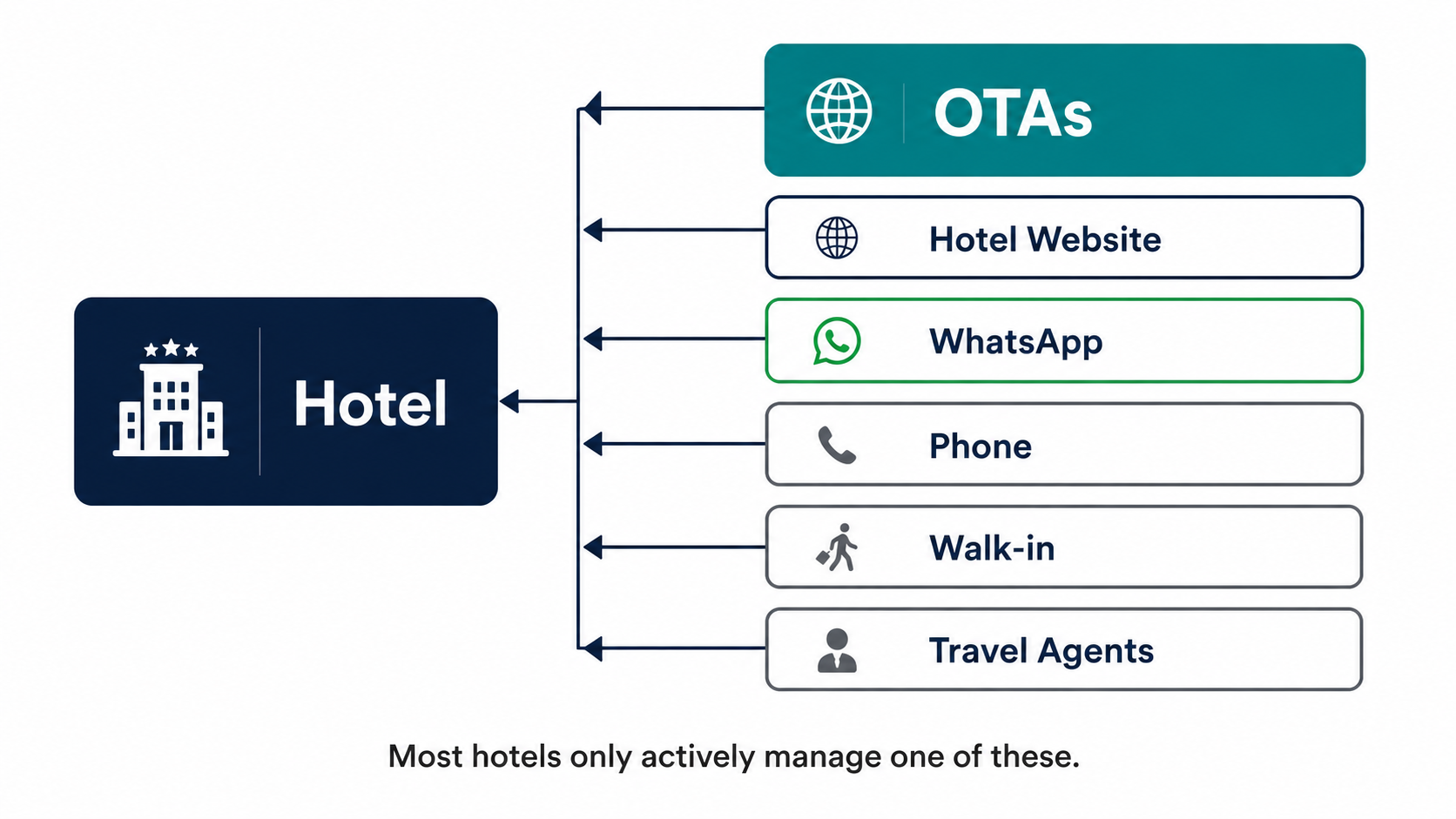
OTAs are one part of how a hotel gets booked, not the whole picture. There is the hotel's own website. WhatsApp. Phone calls. Guests who walk in. Travel agents. Companies that buy rooms in bulk and resell them.
Most hotels focus on OTAs because that is where bookings show up fastest. The other channels still exist. They are just not managed with the same attention.
How Hotels Get Paid
There are two ways OTAs handle payment.
In the first, the guest pays the OTA directly, and the OTA settles with the hotel afterward, usually once a week. MakeMyTrip mostly works this way. In the second, the guest pays the hotel at checkout, and the hotel pays the OTA's commission separately, based on an invoice. Booking.com mostly works this way.
Neither is better overall. The first gives a predictable schedule but a delay before money arrives. The second puts cash in hand right away, but the hotel has to track and pay commissions on its own.
What This Actually Costs
A hotel earning 1 crore rupees a year, with 70 percent of bookings through OTAs at an average 20 percent commission, pays close to 14 lakh rupees a year just to these websites.
Most owners know the commission percentage. Few have added it up into one yearly figure. It usually takes an audit before that number becomes clear.
Knowing what OTAs are is the easy part. What decides whether a guest sees the hotel at all is a harder question.
How OTA Ranking and Visibility Work
A guest searches for hotels in your city. The website shows a list. Some hotels appear near the top. Some sit three pages down where nobody scrolls. The price could be right and the rooms could be good. None of it matters if the listing is buried.
How OTA Ranking Works
Review score matters. So does how complete the listing is. So does how fast the hotel responds to messages. Price matters too, specifically whether it matches the hotel's own website. Paid visibility programs play a role as well. No single one of these moves a listing to the top alone.
Ranking is not fixed either. A hotel on page one this month can slide to page three by next quarter. Nothing announces the drop. Bookings just slow down.
Making Your Listing Worth Clicking
Ranking gets a guest to the listing. The listing has to be good enough that they actually click.
Real, current photos of every room. Every amenity field filled in. A description that says something specific instead of comfortable and spacious. Most hotel listings in India still fall short of this.
Photos go up once during setup and never get updated. A guest deciding on their phone gives a listing a few seconds. Outdated photos get skipped.
Why Reviews Matter More Than People Think
Review score is not only something guests check. OTAs use it to decide ranking too. A higher score lets a hotel charge a little more and still convert, because the score lowers how risky the booking feels.
Reviews do not hold their position on their own. A hotel that stops replying and stops asking happy guests for reviews watches the score drift down. Ranking drifts with it.
Visibility gets a guest to the listing. What happens after that depends on price.
Pricing, Inventory, and Competitor Intelligence
Price is not one number you set and forget. It connects to two things most hotels barely think about. How many rooms are actually left to sell. What the hotel down the road is charging.
Setting the Right Price
A room on a quiet Tuesday should not cost the same as a room before a big local wedding. Demand changes. Price should change with it.
Most hotels pick one rate and leave it for weeks. That is not pricing. That is a number sitting there.
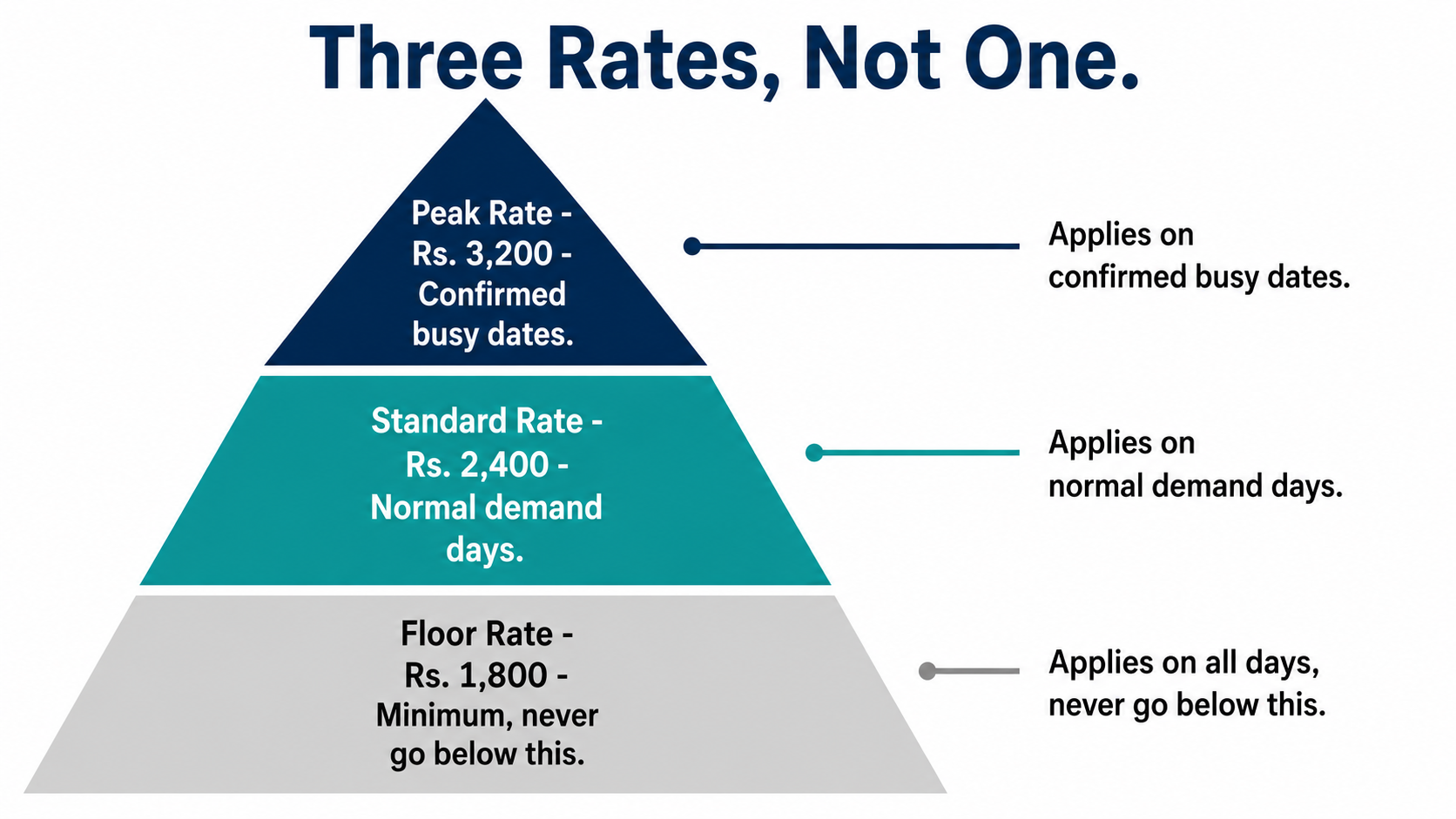
A floor rate, the lowest you ever go. A standard rate for normal days. A peak rate for busy dates. Three rates, not one.
Knowing How Many Rooms You Have Left
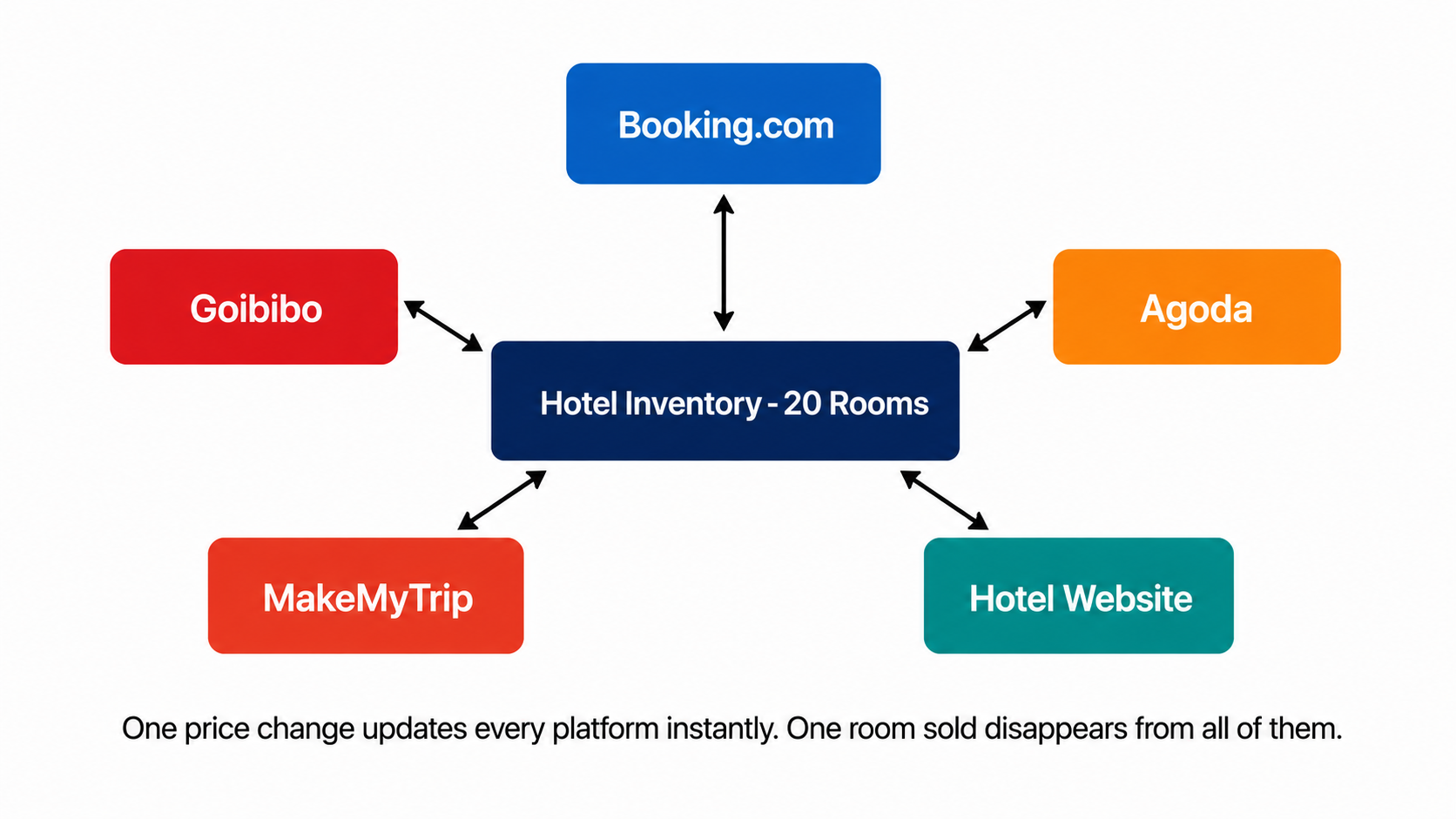
If five rooms are sold out of ten, five are left. That sounds obvious, but hotels lose track of this across multiple OTAs at once. A room sold on MakeMyTrip needs to disappear from Goibibo and Booking.com immediately. If it does not, the same room can get sold twice.
That is overbooking. It usually ends the same way, a guest standing at the front desk with a confirmation email and no room.
Watching What Other Hotels Are Doing
Knowing the comp set's rates is useful. Copying them blind is not the same thing.
Maybe they are running a special offer. Maybe their costs are different. Maybe they are simply pricing themselves wrong. Matching a rate without knowing why is matching a guess, not making a decision.
Pricing, inventory, and watching competitors feed each other. The right price depends on knowing what is left to sell and what the market is doing. Get one wrong and the other two stop making sense.
Pricing and inventory keep a hotel in the running. Sometimes staying in the running still isn't enough.
Promotions, Advertising, and Performance Tracking
Showing up and pricing well still might not be enough.
Promotions and Paid Visibility
OTAs run their own offer programs. Flash sales. Member discounts. A badge that marks the hotel as part of a deal. Joining these can push a listing higher for a few days.
These programs are not free. Some cost a slightly higher commission. Some require dropping the price for that period. Joining one without reading the terms is how hotels end up locked into a deal that is hard to exit.
OTAs also sell ad space. Pay extra and the listing appears in a featured spot regardless of normal ranking. This works only if the extra bookings are worth more than what was paid for the placement.
Joining a promotional program during a slow period because it feels urgent, then struggling to exit once business picks up. Some programs tie ranking to staying enrolled. Read the terms first.
Checking If Any of This Is Actually Working
How many people see the listing. How many click. How many of those clicks become a booking. Which platform brings the most guests, and which one just takes commission without bringing much back.
Most hotels check this rarely. They join a promotion, see a few extra bookings, and assume it worked, without comparing what was spent against what was earned.
Once a week, look at where bookings came from and what each one cost in commission. Over time that tells you which platforms are worth it.
Spending on visibility only makes sense if someone checks whether it worked. None of these pieces, ranking, pricing, promotions, were ever meant to run separately.
Building a Real Distribution Strategy
Everything covered so far is not meant to be done in pieces. Put together correctly, it becomes one actual strategy.
Putting It All Together
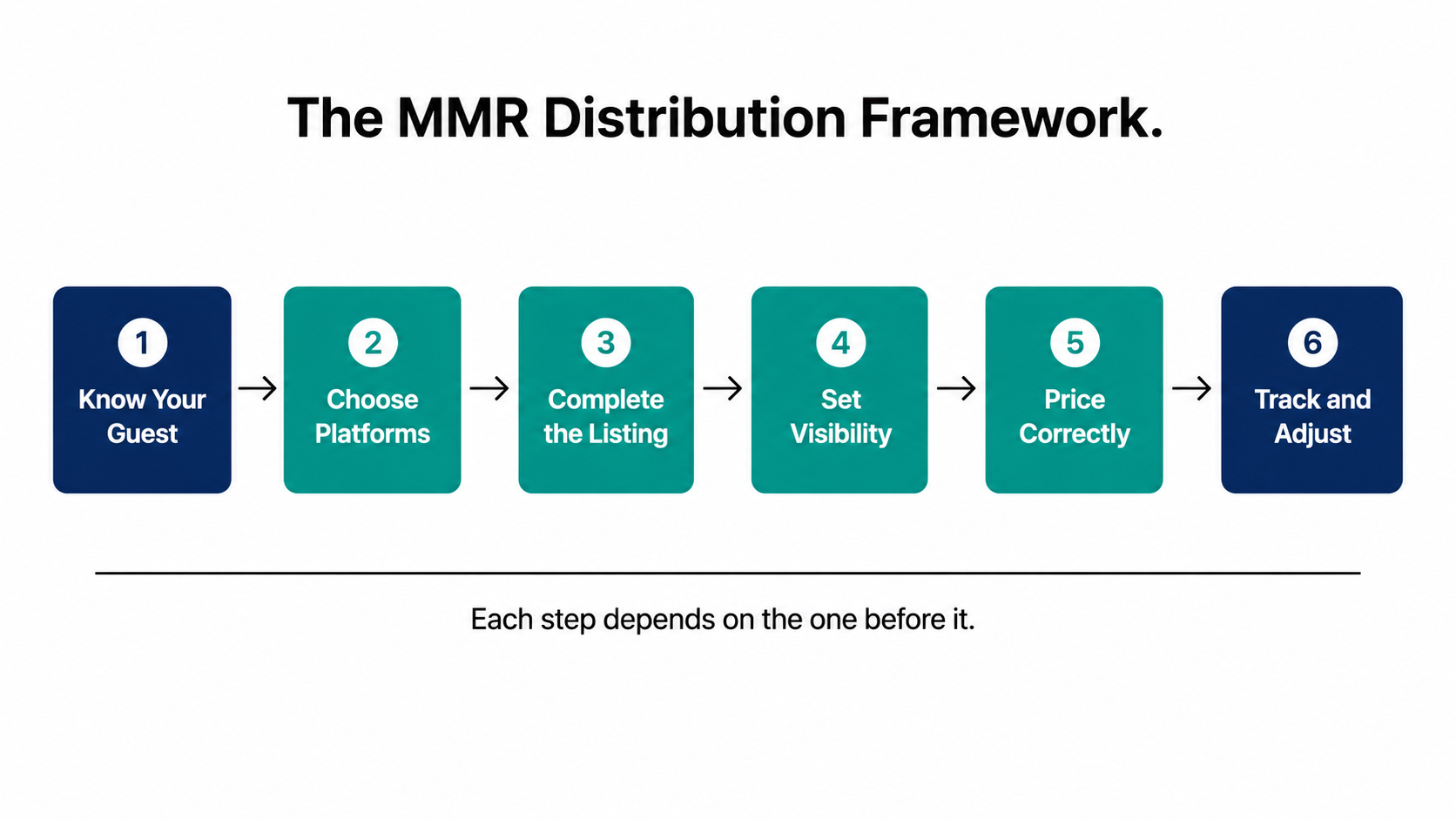
Decide which websites suit your guests first. Make the listing complete enough to get clicked. Price correctly based on demand and the comp set. Use promotions only when the numbers support it. Check regularly whether any of it is working.
Skip a step and the next one wobbles. A sharp price with a sloppy listing still loses. Good ranking with bad pricing still bleeds money.
Reducing How Much You Depend on OTAs
OTAs are useful. Depending on them completely is risky.
A guest who finds a hotel on Booking.com sometimes opens a new tab and searches the hotel directly instead. If they land on the hotel's own website and book there, the hotel keeps the full rate. No commission goes anywhere.
The website needs to be ready for that. Fast to load, clear pricing, a booking process that does not make the guest give up and go back to the OTA.
Going Beyond the Basics
Once the basics work consistently, a few more things matter. Room types and rates set up the same way across every website. Small tests on listing photos and wording. Using past booking data to anticipate busy dates before they arrive.
None of this works without the basics first.
Pick the right platforms for the guest. Make the listing worth clicking. Price based on what is actually happening, not habit. Use paid visibility only when it pays for itself. Build a direct channel strong enough to catch guests who already found you elsewhere. Each step makes the next one work better.
This is the strategy. Running it by hand, across five different logins, is a separate problem entirely.
The Technology Behind Distribution
Doing all of this by hand, logging into five different websites every time something changes, is not realistic past a certain point.
Channel Manager and Connectivity
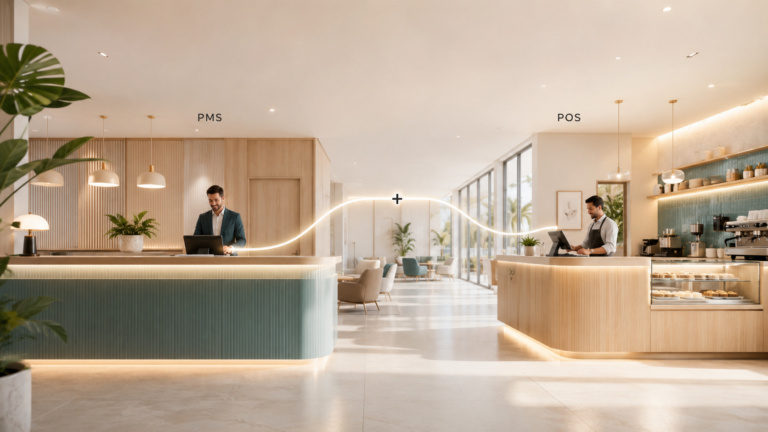
One dashboard, every OTA connected to it. Change a price once and it updates everywhere. Mark a room sold once and it disappears from every other site.
Without this, someone manually logs into MakeMyTrip, then Goibibo, then Booking.com, every time something changes. That takes hours a week, and it is exactly how rooms end up oversold.
This is not an advanced tool for large hotels only. It is closer to the first real upgrade most small Indian hotels need.
A channel manager that connects in real time to every website you sell on. Not the most advanced pricing tool. Just something that stops you from logging into five websites every day.
The right tool removes the manual work. It does not remove the habits that quietly undo everything else.
Common OTA Distribution Mistakes
Fixing these mistakes means changing a habit running quietly in the background for months.
Being on Every Website Without a Reason
Listing on every OTA feels like more visibility. It often just means paying commission on platforms that never brought the right guest.
A Listing That Nobody Updates
Photos go up once and never get touched again. This loses to a competitor with complete, current information, even when the actual hotel is better.
Matching a Competitor's Price Without Knowing Why
Another hotel drops its rate and the instinct is to match it. A price copied without context is a guess, not a decision.
Joining a Promotion Out of Panic
A slow week hits, a discount program looks tempting, and someone signs up without reading the fine print. Exiting later is harder than joining was.
Skipping the Check on Whether It Worked
Promotions run, programs get joined, prices get adjusted, and nobody checks whether any of it paid off.
Dropping rates too low for too long during a slow period. Guests get used to the lower price. Going back afterward usually costs occupancy first.
These mistakes show up everywhere. Which ones bite hardest depends on the kind of hotel making them
OTA Distribution by Hotel Type
The principles apply to every hotel. How they play out depends on the property.
Budget Hotels
Guests decide fast, often within a day or two. Keeping the listing complete and the review score above 4.0 matters most here.
Midscale Hotels
Guests compare value, not just the lowest number. This is where adjusting rates with demand pays off most.
Full-Service and Upscale Hotels
Rooms are only part of what these properties earn. Restaurant, spa, and event spaces need to be visible and bookable too.
Heritage and Boutique Properties
Price is not the competition here. A heritage property sells an experience. Discounting heavily attracts the wrong guest.
Wildlife Resorts and Seasonal Properties
Most of the year's revenue lands in a short window. Underpricing that window costs far more than at a property with steady demand.
Government and Institutional Properties
The assumption that these properties cannot run with the same discipline as private hotels is usually wrong. Process tends to be the real obstacle, not potential.
The principles hold across every property type. Whether they're actually working comes down to the numbers.
OTA Distribution Metrics: What to Track
Numbers tell the real story, not gut feeling about whether OTAs are working.
How Much You Actually Depend on OTAs
This is the single most useful number on this page, and almost nobody calculates it.
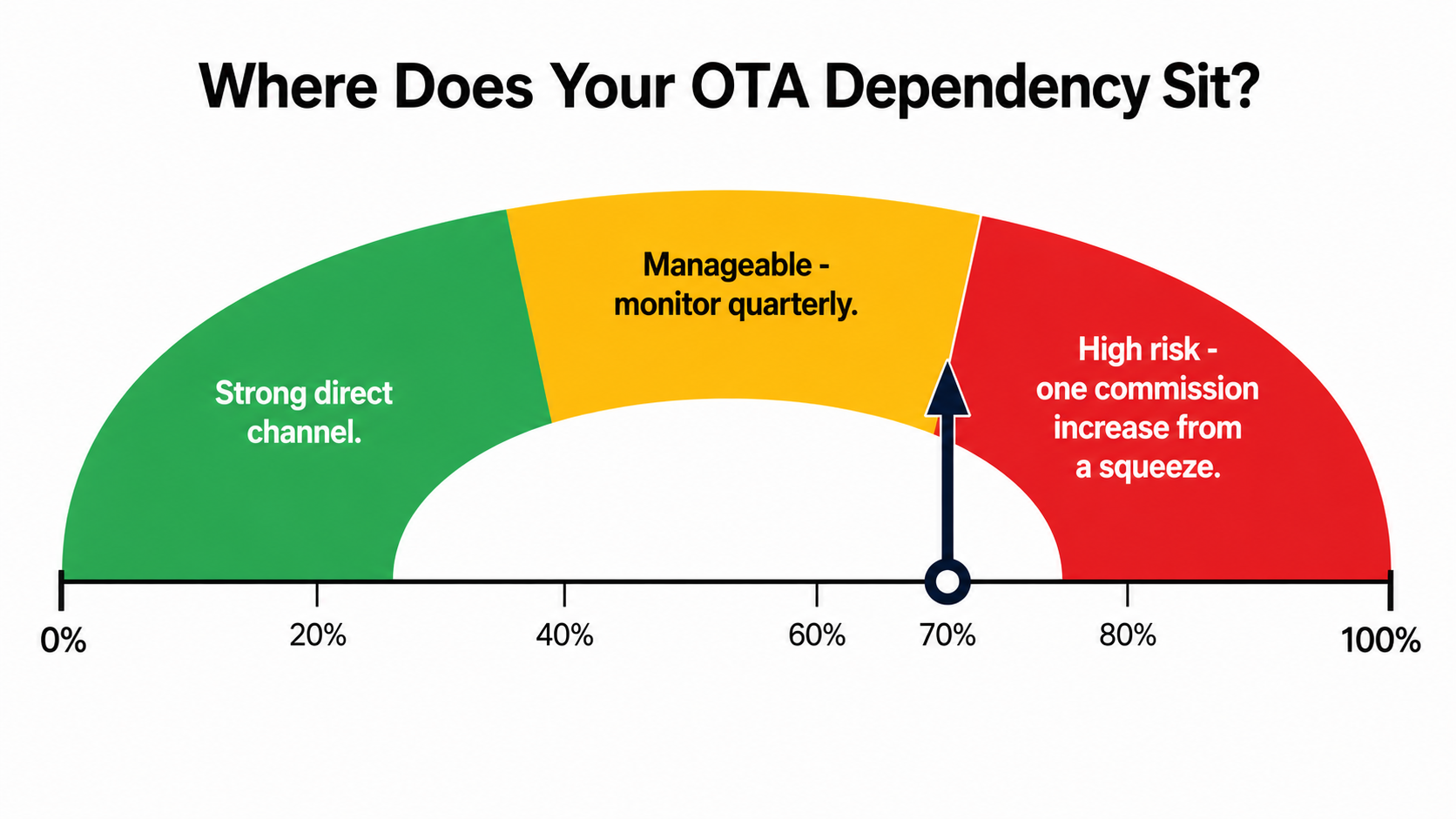
OTA dependency means what share of bookings and revenue comes through OTAs instead of the hotel's own website, WhatsApp, phone, or front desk. For most independent hotels in India, this sits between 50 and 80 percent.
Count every booking from last month. Count how many came through an OTA. Divide and multiply by 100. That is dependency by volume. Do it again with revenue instead of bookings, since the two numbers often do not match.
A rate above 70 percent usually means one commission increase away from a real squeeze on profit. A rate closer to 40 to 55 percent gives more breathing room.
| OTA Dependency | What It Means | What To Do |
|---|---|---|
| Below 40% | Strong direct channel already in place | Protect it |
| 40% to 55% | Healthy balance | Maintain, review quarterly |
| 55% to 70% | OTA-heavy but not at risk yet | Build direct capability now |
| Above 70% | One increase from a profit squeeze | Prioritise direct channel immediately |
Other Numbers Worth Watching
Click-through rate sits between 8 and 15 percent for a strong listing. Below 5 percent, the listing is usually the problem. Conversion rate runs 2 to 4 percent for a competitively priced property. Below 1 percent means guests are showing interest but not booking, a different problem to fix than low clicks.
| Metric | Healthy Range | Weak Range | Check Frequency |
|---|---|---|---|
| Click-Through Rate | 8% to 15% | Below 5% | Monthly |
| Conversion Rate | 2% to 4% | Below 1% | Monthly |
| OTA Dependency | 40% to 55% | Above 70% | Quarterly |
These numbers describe where a hotel stands today. Where this is all heading is worth a look too.
The Future of OTAs
A few directions seem fairly certain based on what is already happening.
Prices Are Becoming More Personal
Rates based on who is searching, not just when, are moving from airline practice into hotel reality. The big OTAs already have the guest data. Most individual hotels do not.
Direct Bookings Are Becoming Less Optional
OTA commission rates keep climbing. A hotel without a working direct channel is increasingly at the mercy of whatever rate gets charged next.
Tools Are Becoming More Connected
Juggling separate logins for every OTA is a real cost that adds up quietly. Connected tools reduce that, but mean depending more on one vendor.
Searching for Hotels Is Starting to Change Too
More travellers are beginning their search using AI tools instead of an OTA app directly. What this means for visibility is still unfolding. What seems clear is that listing information needs to be accurate everywhere it appears.
Keep listing information accurate and consistent across every platform. Every other decision above depends on this foundation being right first.
All Guides in This Pillar
Each guide covers a specific area in depth. Start with the ones most relevant to your current situation.