
How Guests Book Hotels Today
Guests Start Their Hotel Search on Google
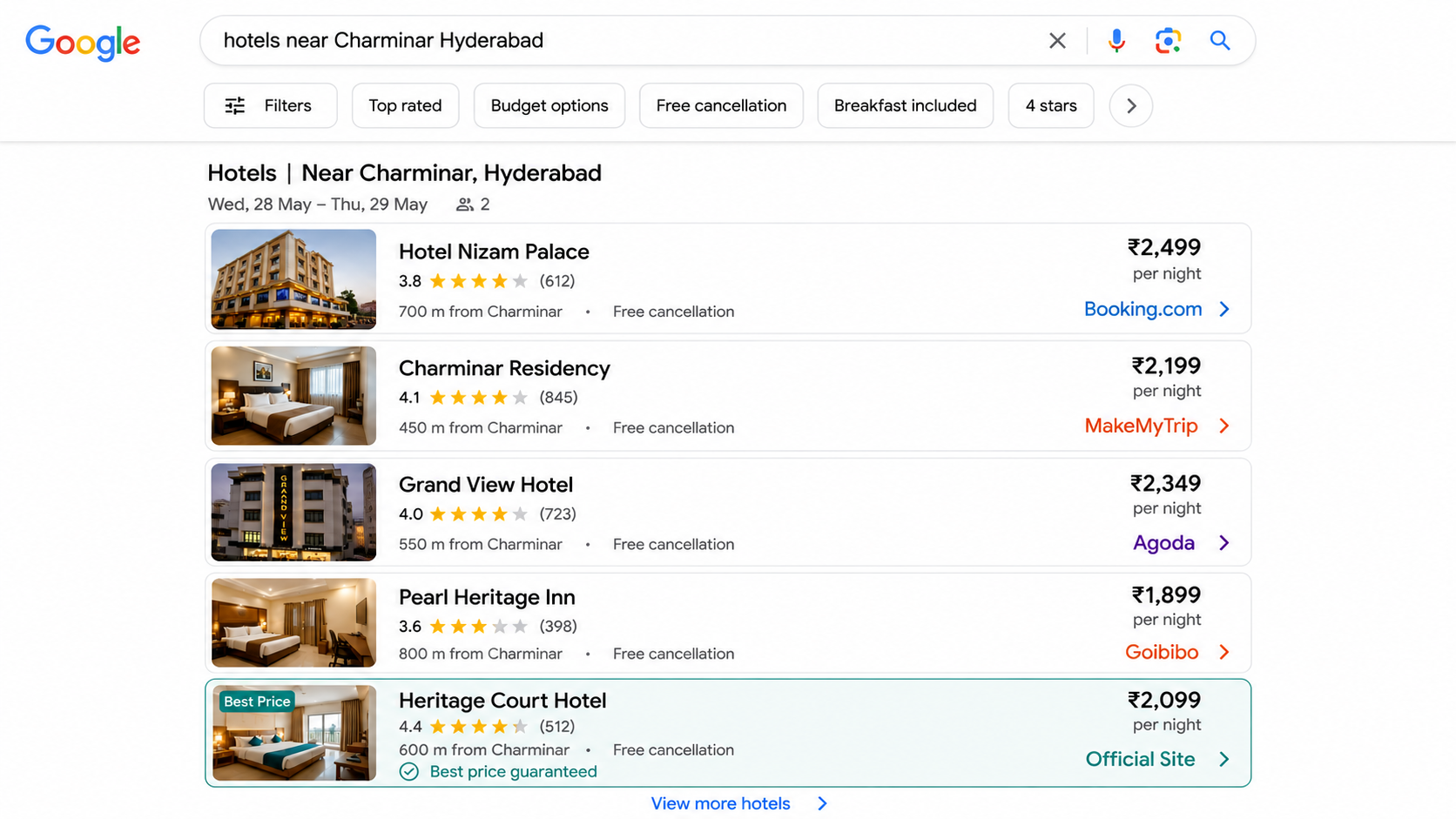
Someone's heading to Hyderabad next weekend and doesn't have a hotel picked yet. They open Google, type "hotels near Charminar," and wait for the list to load. No hotel name in that search. Not yet.
That's most of how this starts. Vague, location-first, the hotel hasn't entered the picture.
Google Shows Multiple Booking Options
The results page that comes back doesn't send anyone to a hotel's website. It shows a stack of options sitting side by side, Google Hotel Ads, Booking.com, Agoda, Goibibo, MakeMyTrip, Expedia, and somewhere in there, if the hotel's set it up, its own site too.
Whatever looks cheapest and easiest in that exact moment usually wins the click.
Most Booking Options Are Online Travel Agencies (OTAs)
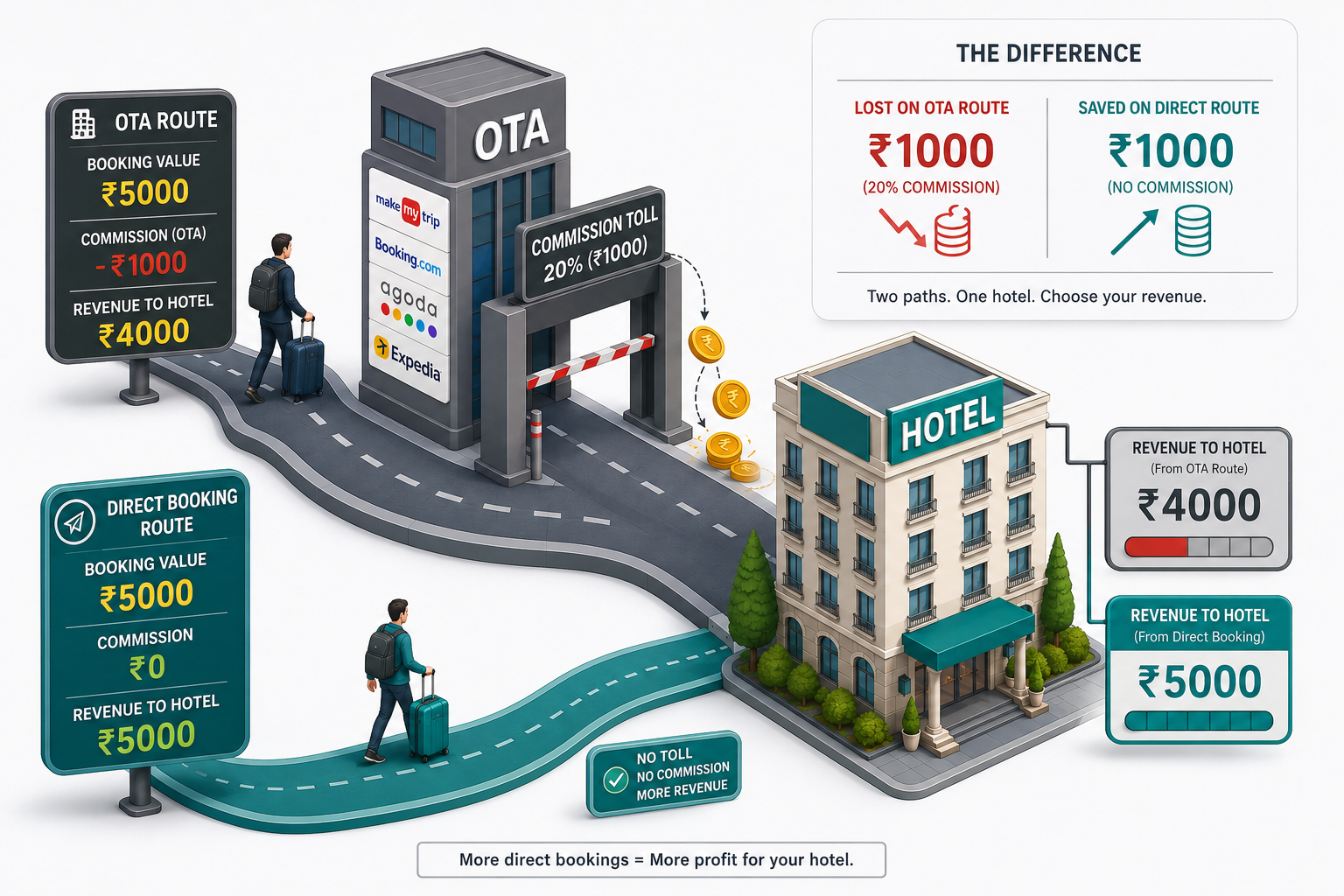
Count what's actually on that list and the hotel itself is maybe one entry out of six or seven. The rest are third-party platforms charging a commission for the booking, typically somewhere between 10 and 30 percent depending on the contract and the market.
The hotel gets seen. It also gives up a real cut of the revenue to be seen.
Most of what shows up on that results page belongs to someone other than the hotel. What actually counts as booking direct is worth pinning down properly.
What Is a Hotel Direct Booking?
A direct booking is a reservation made with the hotel itself, through something the hotel owns or controls, not through a third party sitting in between.
What Makes a Booking "Direct"
Strip it down and the path looks like this: guest finds the hotel's website, moves into the booking engine, books, hotel gets the reservation. Nobody else touches it along the way.
That last part is the whole point. No intermediary holding the booking, taking a cut, or owning the guest relationship in the middle.
Direct Booking vs OTA Booking
| Questions | Direct Booking | OTA Booking |
|---|---|---|
| Who controls the reservation | The hotel | The OTA |
| Commission paid | Booking engine fee, 2-5% | 10-30% typically |
| Guest contact details | Hotel has them fully | Limited, often just a name and dates |
| Payment timing | At or before check-in | Till Check-Out, Sometimes Weekly and Monthly |
| Rate flexibility | Full control | Bound by parity terms |
Why Direct Bookings Matter
Lower acquisition cost is the obvious one. Better profit follows from that directly. Beyond the money, the hotel actually owns the guest relationship, which means real CRM data, a genuine shot at upselling during the stay, and a path back to that guest for a repeat booking without paying commission twice.
That's the definition. Getting a guest to actually use that path instead of the OTA link sitting right next to it is the harder part.
How Hotels Get Direct Bookings
Each of these channels does something different. None of them work in isolation, and most hotels only ever set up one or two properly.
Google Hotel Ads
A guest comparing prices on Google sees the hotel's own listing sitting right next to Booking.com and MakeMyTrip, labeled as the official source, showing the hotel's actual rate. Click it, and the guest lands on the hotel's booking engine, not on a third-party page.
Setting this up means connecting to Google's Hotel Center, keeping rates and availability synced in real time, and bidding competitively enough that the listing actually shows. Most independent hotels in India skip this entirely, mostly because nobody's told them it exists as an option separate from just having a website.
Hotel Website
The website is where all of this either works or falls apart. Slow load times lose guests before they even see a rate. A site that doesn't work properly on a phone loses even more, since most of this traffic is mobile. Trust matters too, real photos, clear policies, something that looks like it belongs to an actual operating hotel and not a template nobody finished setting up.
Booking Engine
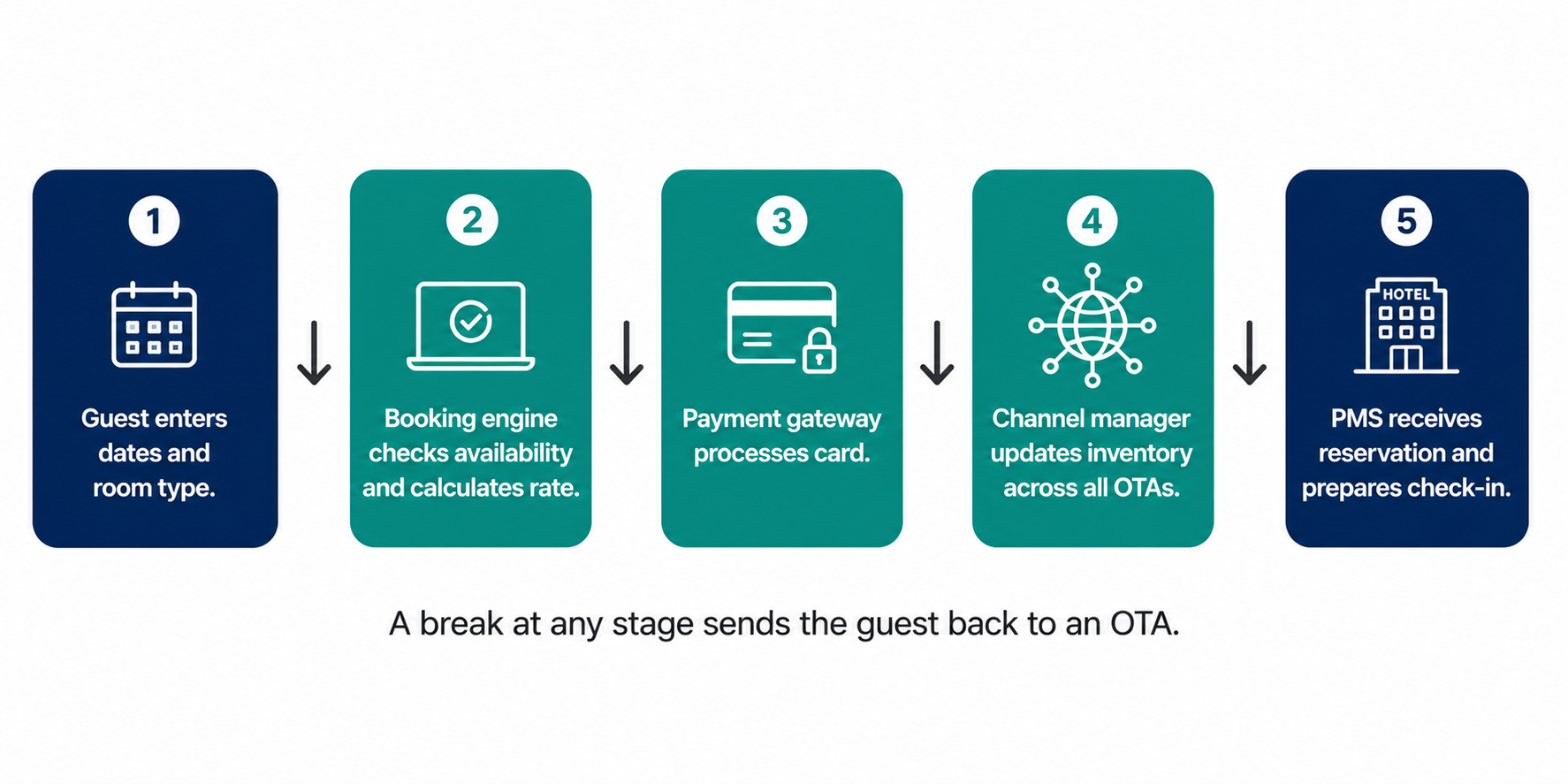
This is the part that actually processes the reservation. It collects the guest's information, calculates the rate based on dates and room type, runs the payment, sends a confirmation, and updates inventory so the room doesn't accidentally get sold twice somewhere else.
Guest enters dates, booking engine checks availability and price, payment gateway processes the card, channel manager gets notified, PMS receives the reservation. That's the chain, and if any link in it is broken or missing, the booking either fails or creates a mess somewhere downstream.
Running Google Hotel Ads without a properly connected booking engine. The ad drives the click, the guest lands on a page that can't actually process a direct payment, and they leave and book on Booking.com instead. The ad spend is gone and the commission still gets paid anyway.
Direct Phone Calls
Some guests still just call. This only works if the hotel actually shows up when someone searches the name on Google, which is where the Google Business Profile matters more than most owners realise. A phone number buried on page three of search results doesn't ring.
WhatsApp Bookings
Often repeat guests, or someone who got a recommendation from a friend and is messaging directly instead of searching. Quick, personal, and it skips every layer of OTA and ad spend entirely.
Walk-in Guests
Still genuinely significant for hotels near pilgrimage sites, highways, airports, and business districts where someone decides on the spot, no search involved at all.
Email Reservations
Corporate bookings mostly, travel desks, and group blocks where a written confirmation matters more than speed.
Each of these channels works on its own. None of them work well without the systems sitting underneath them.
Technology Behind Direct Booking
Booking Engine
Already covered above as the core piece that actually processes a reservation. Worth repeating here only because everything else in this section depends on this one working correctly first.
Payment Gateway
This is what actually moves the money. Payment gateways generally charge a much smaller transaction fee than OTA commission, usually a few percent compared to 15 to 30, though it's worth being clear these aren't really substitutes for each other. One processes a payment. The other is a distribution and marketing channel that happens to also process payment. Comparing them purely on fee percentage misses what each one is actually for.
Channel Manager
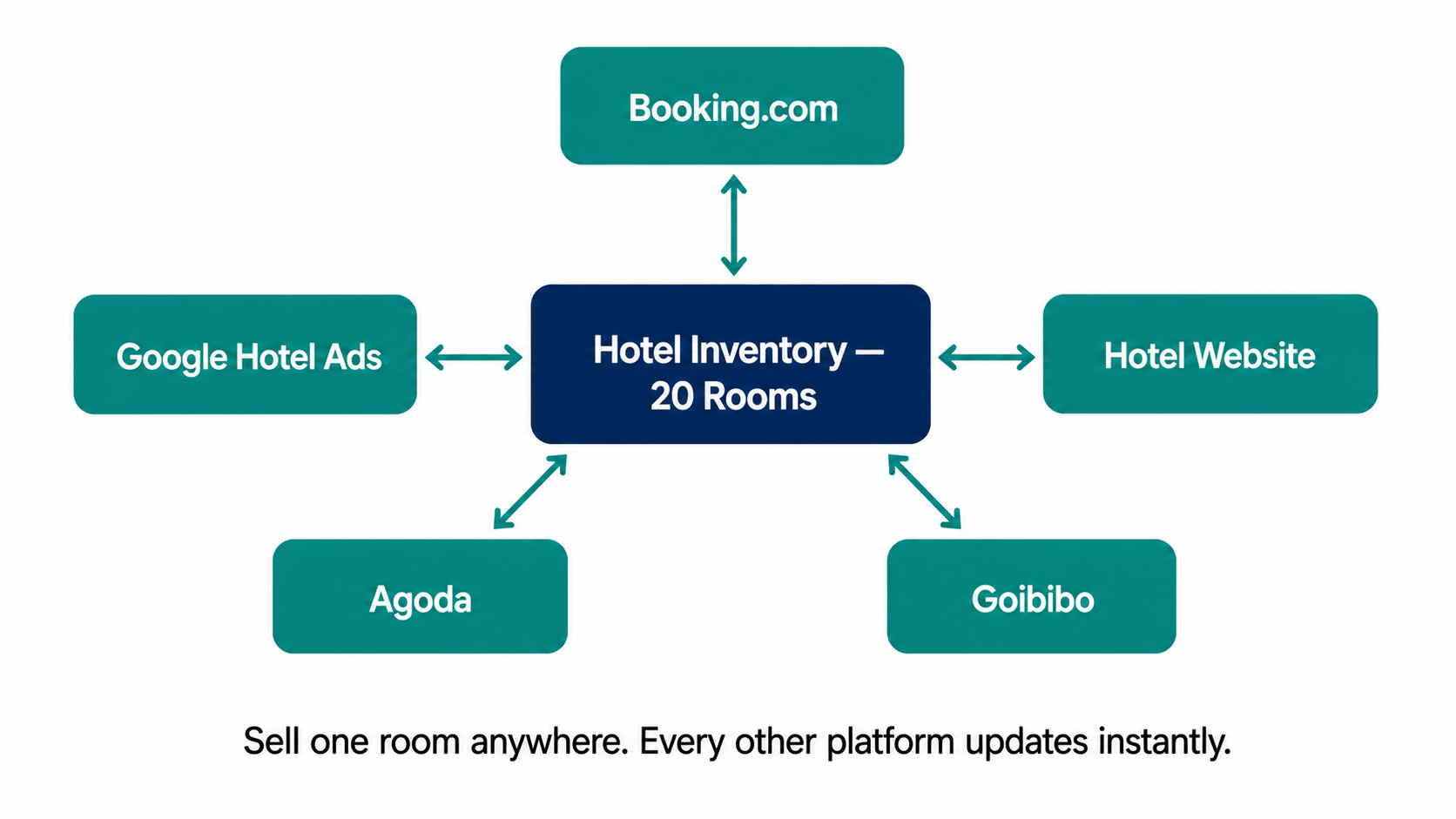
A hotel with 20 rooms doesn't have 20 rooms times five platforms worth of inventory to track manually. It has 20 rooms, period, and every booking on any platform needs to update that same number everywhere else instantly. Sell a room on Booking.com, and Goibibo, Agoda, Google Hotel Ads, and the hotel's own website all need to show one less room available, immediately, or someone ends up double-booked.
That's what a channel manager actually does. It sits in the middle and keeps every channel honest about what's actually left to sell.
Property Management System (PMS)
Once a reservation exists, somebody needs to turn it into an actual check-in, assign a room, track the stay, and eventually close it out. That's the PMS. Direct bookings flow into it the same way OTA bookings do, the difference is just which channel the reservation originally came from.
CRS (Optional)
Central Reservation Systems matter more for hotel groups managing multiple properties under one brand. Most independent properties don't need this layer. Worth knowing it exists for hotels planning to scale into a small chain.
These pieces, the booking engine, the payment gateway, the channel manager, the PMS, only matter once they're connected in the right order. Here's what that order actually looks like end to end.
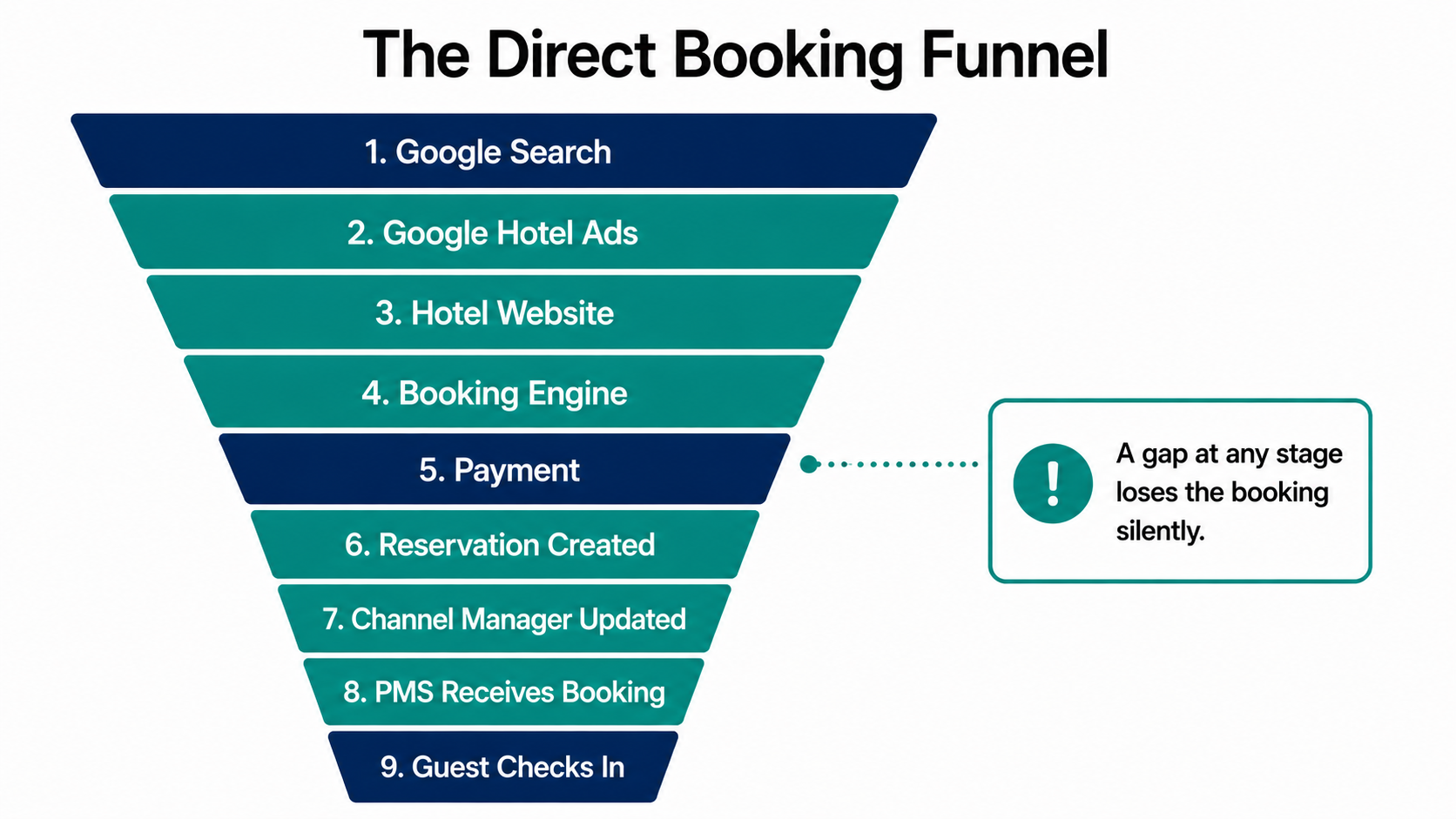
Direct Booking Funnel
A guest searches Google. Google shows Hotel Ads alongside the OTA listings. The guest clicks the hotel's own listing instead of an OTA one. That click lands on the hotel website. The website pushes them into the booking engine. The booking engine processes payment. A reservation gets created. The channel manager updates inventory across every other platform. The PMS receives the booking and prepares for check-in.
Eight steps, one path, and if any single step is missing or broken the guest quietly falls back to an OTA without anyone at the hotel ever knowing why.
That's the full path from a Google search to a guest checking in. Getting more guests to actually take that path is a separate set of decisions.
Strategies to Increase Hotel Direct Bookings
Offer Better Direct Rates
Where rate parity rules allow it, even a modest rate advantage or a value-add (free breakfast, late checkout) gives a guest a real reason to book direct instead of defaulting to whichever OTA loaded first.
Improve Google Visibility
Branded search, the hotel's actual name, and location-based search both need basic SEO work. A hotel that doesn't rank for its own name is losing guests who are already trying to find it.
Invest in Google Hotel Ads
Covered earlier, worth repeating as a strategy in its own right since most hotels still haven't set it up.
Encourage Repeat Guests
A guest who already stayed once is far cheaper to bring back directly than to win for the first time through any paid channel. A simple post-stay email with a direct booking offer does more than most hotels expect.
Collect Guest Data
Every direct booking is a chance to capture an email address and phone number properly, not just a name on a reservation. This only pays off later, but it only exists at all if someone bothers collecting it now.
Optimize Your Booking Engine
A slow or confusing booking engine loses guests who already chose to book direct. That's the most expensive kind of guest to lose, since they'd already decided.
Improve Mobile Conversion
Most of this traffic arrives on a phone. A booking flow that wasn't actually tested on mobile is probably losing bookings nobody's tracking.
None of these strategies work in isolation either. Most hotels trying to apply just one or two of them run into the same handful of problems.
Common Challenges
OTA dependency built up over years rarely gets fixed by one new tool. High commissions keep eating margin until someone calculates the actual annual number and finally takes it seriously. Low website traffic means none of this matters yet, since there's nobody to convert. Poor conversion means traffic exists but leaks out before booking. Price parity rules limit how much room there is to compete on rate alone. And a slow booking engine undoes the work of getting a guest that far in the first place.
Most of these aren't separate problems. They're the same underlying issue showing up in different parts of the funnel.
All Guides in This Pillar
Each guide covers a specific area in depth. Start with the ones most relevant to your current situation.