

What Is a Hotel Booking Engine?
Definition and Core Functions
A booking engine handles the transaction that OTAs handle on their own platforms: availability search, room display, rate selection, guest detail collection, payment processing, and reservation confirmation. The difference is that when a guest uses the hotel's booking engine, the hotel retains the guest's actual contact data, pays a much lower acquisition cost than OTA commission, and establishes the direct relationship that enables future communication without OTA intermediation.
The booking engine's performance is measured by its conversion rate: what percentage of guests who enter the booking engine complete a reservation. A booking engine converting at 5% and another converting at 2% have a threefold difference in direct booking output for the same traffic volume. That difference is worth understanding in financial terms before deciding whether to invest in advertising to drive more traffic or in conversion optimisation to extract more value from existing traffic.
Booking Engine vs OTA
| Factor | Hotel Booking Engine | OTA Booking |
|---|---|---|
| Guest Data | Full: actual email, phone, payment preference, stay history. Hotel owns the data. | Limited: masked email in most cases. Guest data belongs to the OTA. |
| Acquisition Cost | 6–12% effective cost (Google Hotel Ads + booking engine fees) or near-zero for organic direct traffic | 12–22% commission per booking |
| Repeat Booking Cost | Near-zero: email or WhatsApp re-engagement at near-zero marginal cost | Full commission on every repeat booking if guest returns through OTA |
| Pricing Control | Full: hotel sets and manages its own rate without OTA programme constraints | Rate parity obligations and promotional programme requirements constrain flexibility |
| User Experience | Variable: depends on quality of the specific booking engine chosen and how well it's configured | Consistently smooth: OTAs invest heavily in conversion optimisation |
| Trust Signal | Guests booking direct are already brand-aware. Trust is established before the booking engine is reached. | OTA's trust brand supplements the hotel's. Guests who don't know the hotel still trust Booking.com's platform. |
Booking Abandonment Analysis
Booking abandonment is the rate at which guests enter the booking engine and leave before completing a reservation. Industry-wide, hotel booking engine abandonment rates typically run between 80 and 92%: for every 100 guests who enter the booking engine, 8 to 20 complete a booking. The specific abandonment rate for any property depends on the booking engine's UX quality, mobile performance, payment options, and how accurately the advertised rate matches the checkout total.
What matters more than the overall abandonment rate is where guests abandon. Different abandonment points have different causes and different fixes.
| Abandonment Point | What the Guest Was Doing | Most Common Cause | Fix Priority |
|---|---|---|---|
| Availability search page | Entering dates and guest count to check availability | Booking engine loading slowly. No rooms showing for selected dates (closed inventory). Interface confusing on mobile. | High: this is before the guest has seen a room. If they leave here, the funnel failed at the entry point. |
| Room selection page | Browsing room types and deciding which to book | Room descriptions too generic to differentiate. No photos for specific room types. Rate gap between room types not explained. Price higher than expected relative to what was advertised. | High: most bookings are won or lost on the room selection page. |
| Rate selection page | Choosing between flexible, non-refundable, breakfast-included rates | Rate plan structure confusing. Non-refundable rate not sufficiently discounted to justify the commitment. Breakfast-included rate too expensive relative to the perceived value. | Medium: guests who reach this page are motivated. Simplify the rate plan presentation. |
| Guest details page | Entering name, email, phone, and other required information | Too many required fields. Form auto-fill not working. Session timeout during form completion on mobile. | Medium: reduce form fields to the absolute minimum required for the booking. |
| Payment page | Entering payment details and confirming the reservation | Missing UPI payment option. Payment gateway loads slowly or fails. Total at checkout higher than the rate advertised on the room selection page. Unfamiliar third-party payment gateway reduces trust. | Critical: abandonment at the payment page represents a guest who completed every prior step and was stopped at the final moment. |
Do this once a month: complete a full test booking from start to confirmation on a mobile phone. Use an actual mobile device on a standard mobile data connection, not a desktop browser with mobile screen emulation. Time each step. Note the moment where the experience would cause a real guest to reconsider. Whatever that moment is, it is costing direct bookings every day. This test consistently surfaces conversion problems that analytics alone doesn't make obvious because analytics shows where guests leave but not why they left.
Essential Features Every Booking Engine Should Have
| Feature | Why It Matters | Without It |
|---|---|---|
| Real-Time Availability | Rooms displayed must reflect actual current availability. A sold-out room appearing as available produces an error at the final booking step, which guests read as a technical failure and associate with the hotel's competence. | Bookings for sold-out rooms. Overbookings if channel manager integration is absent. Guest frustration at the final step. |
| Mobile-First Design | Over 65% of hotel website visits in India are on mobile. A booking engine that doesn't render and function correctly on mobile loses the majority of potential direct bookings before they reach payment. | High mobile abandonment rate. Direct bookings diverted to OTAs which have mobile-optimised checkout. |
| Transparent Pricing | Total price including GST and all fees shown from the room selection page. No surprise additions at checkout. | Price shown on room selection page differs from checkout total. Guest abandons at payment step or books on OTA where total pricing is shown upfront. |
| UPI Payment Support | UPI is a primary payment method for a large share of Indian travellers under 40. A booking engine without UPI is requiring these guests to use a non-preferred payment method or abandoning the booking. | Payment abandonment from UPI-preferring guests. Lost bookings to OTAs that support UPI natively. |
| Google Hotel Ads Connectivity | The booking engine must be able to supply a live price feed to Google Hotel Center to enable Google Hotel Ads. Without this, the hotel's direct rate cannot appear alongside OTA rates in Google search results. | No Google Hotel Ads possible. The single highest-return direct booking acquisition channel is unavailable. |
| Channel Manager Integration | Direct bookings must reduce available inventory on all connected OTAs simultaneously. Without channel manager integration, a direct booking can cause an overbooking if the same room is sold on an OTA before the inventory is manually updated. | Overbooking risk. Manual inventory management required after each direct booking. |
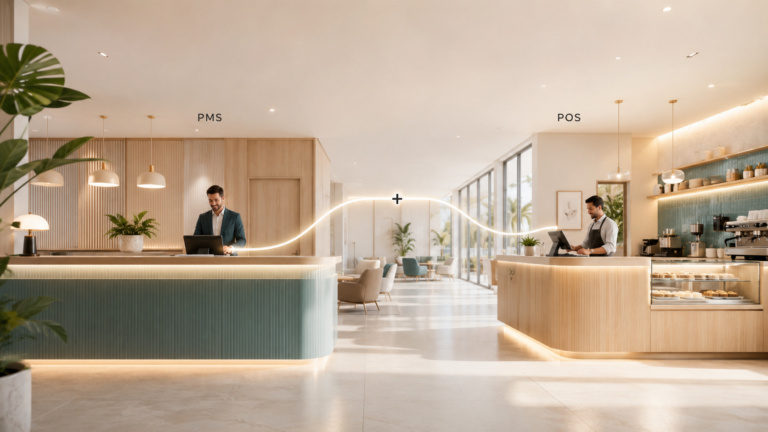
| PMS Integration | Confirmed bookings from the direct channel should appear in the PMS automatically, without manual entry. Manual entry creates errors, delays, and occasional missing reservations at check-in. | Manual reservation entry for every direct booking. Entry errors cause incorrect room assignments or missed arrivals. |
| Upsell Capability | Ability to offer room upgrades, breakfast add-ons, early check-in, late checkout, or activities during the booking flow. Improves TRevPAR per direct booking. | No incremental revenue capture during the booking process. Direct booking produces only room rate revenue. |
| Promo Codes | Enables targeted direct booking incentives for past guests, corporate clients, and email marketing subscribers. | No mechanism for loyalty or targeted offers through the direct channel. These guests book through OTAs instead. |
| Conversion Tracking | Google Analytics 4 integration plus Google Ads conversion tag on the confirmation page. Essential for measuring ROI on Google Hotel Ads and understanding where guests abandon the booking funnel. | Cannot measure direct booking conversion rate. Cannot calculate Google Hotel Ads ROI. Cannot identify which booking step causes the most abandonment. |
Choosing the Right Booking Engine
| Criterion | What to Evaluate | Questions to Ask the Vendor |
|---|---|---|
| Mobile Performance | Request access to a live demo on an actual mobile device. Time each step. Check PageSpeed Insights score for the booking engine URL specifically. | "What is your booking engine's average PageSpeed score on mobile? Can we test it on an actual mobile device before we sign?" |
| Google Hotel Ads Integration | Is Google Hotel Ads connectivity native (built in) or through a third party? Native integrations are more reliable and faster to set up. | "Is Google Hotel Ads connectivity included in the base package or is it an add-on? Is it a native integration or through a connectivity partner?" |
| PMS Integration Quality | Certified two-way integration with the specific PMS in use. Ask for the list of certified PMS integrations. | "Is your integration with [our PMS] certified and maintained directly, or is it through a third-party middleware? When was it last tested?" |
| Payment Gateway Options | Which payment gateways are supported? Is UPI available? Which gateways are available for Indian properties specifically? | "Which payment gateways do you support in India? Can guests pay with UPI, net banking, and credit/debit cards? Is EMI available for higher-value stays?" |
| Conversion Reporting | Does the engine provide its own conversion analytics? Does it integrate with Google Analytics 4 natively? | "Can we see our booking funnel conversion rate at each step in your dashboard? Do you support Google Analytics 4 integration?" |
| Pricing Model | Flat monthly fee vs per-booking fee vs percentage of booking value. Understand the total cost across expected booking volume. | "What is the all-in monthly cost including Google Hotel Ads connectivity, PMS integration, and support? Are there per-booking fees on top of the base price?" |
Booking Engine and Revenue Management
The booking engine is not just a transaction processor. It is a revenue management tool that can implement rate changes, length-of-stay restrictions, promotional packages, and upsell offers in real time. A booking engine that only displays static rates and takes payments is leaving revenue management capability unused.
| Revenue Management Function | How the Booking Engine Supports It | Implementation |
|---|---|---|
| Dynamic pricing | Rates loaded in the booking engine should reflect demand-based pricing decisions, updating in real time as the RMS or revenue manager makes changes. The engine displays whatever rate is current, not a static rate set at the start of the month. | Rate updates made in the PMS or channel manager flow to the booking engine automatically through the integration. Verify the update latency: changes should appear in the booking engine within 5 minutes of being made. |
| MinLOS restrictions | The booking engine enforces MinLOS restrictions configured in the PMS or channel manager. A guest attempting to book a single night on a date with a 2-night minimum should be unable to complete the booking and should be shown a message explaining the minimum stay requirement. | Configure MinLOS in the channel manager or PMS. Verify the booking engine correctly enforces the restriction by attempting a single-night booking on a restricted date in test mode. |
| Package pricing | Packages that bundle room and ancillary services (breakfast included, spa credit, early check-in) are displayed in the booking engine as distinct rate plan options with clear descriptions of what is included. | Configure packages in the booking engine's rate plan setup. Verify the package price, inclusions, and cancellation policy are clearly visible before the guest commits to that rate plan. |
| Direct booking incentives | The direct booking incentive (complimentary breakfast, flexible cancellation, room upgrade) should be visible on the booking engine's room selection page, not only on the hotel website homepage. Guests who reach the booking engine from Google Hotel Ads may not have seen the website homepage. | Add the direct booking benefit as a visible element on the room selection page. "Book direct: complimentary breakfast included for all room types" should appear before the guest selects a rate plan. |
Measuring Booking Engine Performance
| KPI | Formula | Target | Action if Below Target |
|---|---|---|---|
| Booking Engine Conversion Rate | Confirmed bookings ÷ Booking engine sessions × 100 | 3–6% for brand traffic. Below 2% indicates a booking engine UX or pricing problem. | Run the mobile abandonment test. Identify the specific step where sessions drop most sharply. |
| Booking Abandonment Rate by Step | Sessions entering each step ÷ sessions completing that step × 100. Requires Google Analytics funnel configuration. | Less than 30% drop-off at any single step | Step with drop-off above 40%: investigate that step specifically. Payment step abandonment above 30% means payment options need review. |
| Mobile vs Desktop Conversion Rate | Separate conversion rates for mobile and desktop sessions | Mobile conversion should be within 1.5 percentage points of desktop. A larger gap indicates mobile-specific UX problems. | Mobile conversion significantly below desktop: mobile speed test, mobile form usability test, mobile payment flow test. |
| Direct Booking Share | Direct bookings ÷ Total bookings × 100 | Increasing trend month-on-month. Absolute target varies by property type and market. | Flat or declining direct booking share despite growing traffic: conversion problem in the booking engine or website. |
| Average Direct Booking Value | Total direct booking revenue ÷ Number of direct bookings | Should be at or above OTA average booking value. If significantly below: direct guests are booking shorter stays or lower room types. Investigate package and upsell visibility. | Direct booking value below OTA average: review whether upsell offers are visible during the booking flow. |
Weekly Booking Engine Audit
Complete a test booking from start to confirmation on a mobile phone. Verify the rate shown in the booking engine matches the current rate in the channel manager or PMS for the same dates. Test at least one payment method (UPI if available) to confirm the payment gateway is functioning. Check Google Analytics for the past 7 days: booking engine sessions, conversion rate, and primary abandonment step. Verify that direct bookings received in the past 7 days are all appearing in the PMS correctly.
Calculate booking engine conversion rate for the month and compare against prior month and prior year. Identify whether the primary abandonment step has changed. Compare direct booking ADR against OTA channel ADR from the same period: if direct ADR is below OTA ADR, review whether upsell and package visibility is sufficient. Verify Google Hotel Ads connectivity is active: search the hotel name on Google and confirm the direct rate appears in the comparison panel alongside OTA rates. Calculate direct booking share trend over the past 6 months.
Frequently Asked Questions
Want this set up for your property?
We'll review this against your hotel's current setup, free of charge.