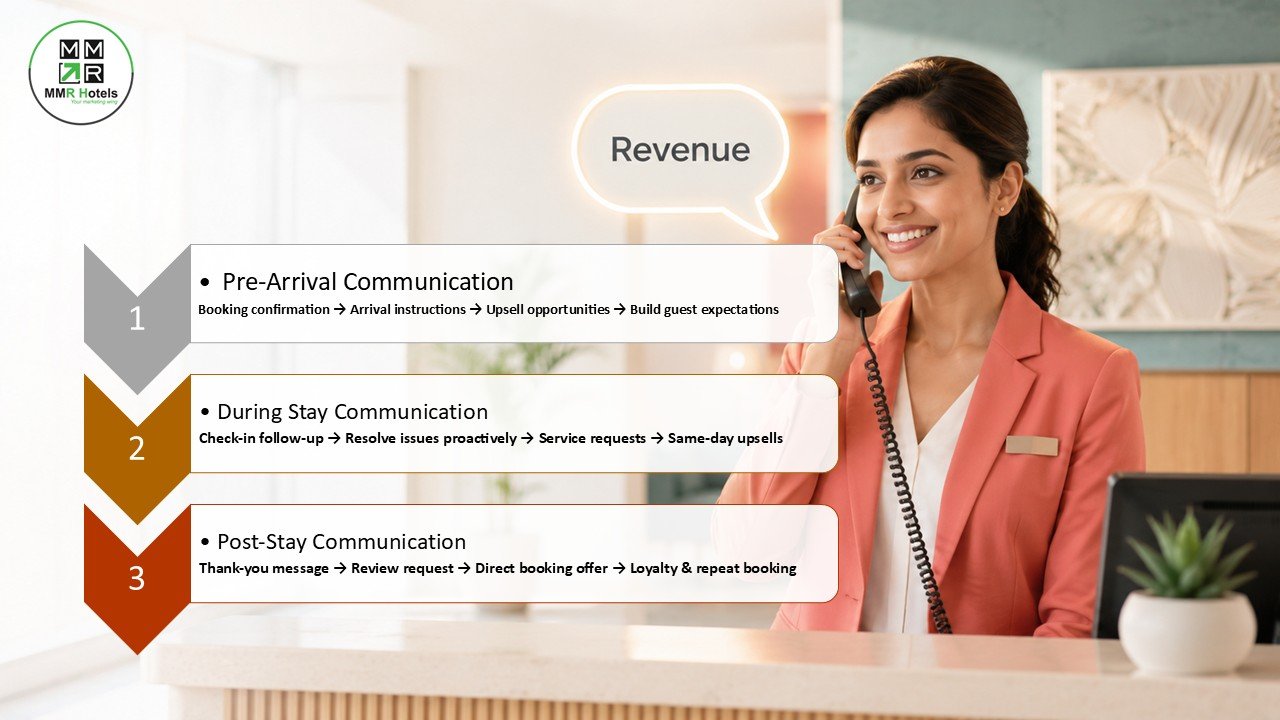
A guest books a room. The hotel sends a confirmation email. The guest arrives. Nobody said anything in between. That gap, from booking confirmation to check-in, is where most hotels leave money on the table without realising it. A guest who has already committed to a stay is the warmest possible prospect for a room upgrade, a spa booking, a dinner reservation, or a late checkout. Most properties never reach out.
The Gap Between Booking and Arrival
The pre-arrival window, typically 3 to 7 days before check-in, is when a guest is thinking about their upcoming trip most actively. They are finalising plans, checking what to pack, sometimes reconsidering whether they need the dinner reservation they meant to make. A well-timed message from the hotel arrives at exactly this moment and has a conversion rate that cold marketing never achieves.
This is not hypothetical. Hotels that run structured pre-arrival communication programmes consistently report ancillary revenue per booking 15 to 25% higher than those that don't, on identical room inventory, at identical rates. The difference is not discounting. It is timing.
What Pre-Arrival Communication Should Actually Say
Not a marketing brochure. Not a repeat of the booking confirmation. Something short, warm, and specific to what the guest booked. A couple in a Deluxe Room for a weekend gets a message that mentions the rooftop restaurant and the spa availability for Saturday afternoon. A family arriving for four nights gets a message about the kids' breakfast menu and the activity schedule. A solo business traveller arriving at 11 PM gets directions and the after-hours check-in process.
The message should do three things: make the guest feel expected and welcomed before they arrive, answer the most common pre-arrival questions so they don't have to ask, and offer one specific additional service relevant to their stay type. Not five services listed in a bulleted email. One relevant offer, with a simple way to accept.
During-Stay Communication
During the stay, the most effective communication is proactive problem solving before a problem becomes a review. A message sent at check-in completion asking if the room is as expected catches issues that guests would otherwise silently note for their post-stay review. A simple "everything okay with your room?" message can surface a WiFi problem, a maintenance issue, or a missing amenity in time to fix it before checkout.
In-stay communication also creates opportunities for same-day ancillary upsell: "The spa has a 4 PM slot open today if you'd like to book" is more effective sent at 2 PM on the day than included in the pre-arrival email three days earlier.
Post-Stay Communication for Repeat Bookings
The 48 hours after checkout is the highest-engagement window for post-stay communication. The guest is still thinking about the trip. The experience is fresh. A thank-you message sent within 24 hours of checkout that includes a direct booking link and a review request captures this moment rather than leaving it to the OTA to fill with its own post-stay messaging.
This is also the most cost-effective direct booking acquisition available. A guest who books direct on their second stay has been converted from an OTA channel at the cost of a single email or WhatsApp message. Over two or three stays, that conversion saves INR 3,000 to 8,000 in commission on a typical Indian mid-scale property booking.
WhatsApp vs Email in the Indian Context
For domestic Indian guests, WhatsApp consistently outperforms email on open rate, response rate, and conversion. Email open rates for hotel pre-arrival communications in India run at roughly 20 to 30%. WhatsApp message open rates are significantly higher, and response times are much shorter. A guest who receives a pre-arrival WhatsApp message from the hotel is far more likely to see it and act on it than the same message sent by email.
| Channel | Best For | Indian Guest Response Rate | When to Use It |
|---|---|---|---|
| Pre-arrival offers, arrival instructions, in-stay requests, post-stay thank you | High | Domestic Indian guests. Any message requiring a response or action. | |
| Booking confirmation, detailed pre-arrival information, long-form post-stay communication | Moderate | International guests. Formal documentation. Guests who have not provided a WhatsApp number. | |
| SMS | Arrival confirmation, check-in readiness notification | Moderate | Brief operational messages when WhatsApp is not available. |
If a hotel currently does no pre-arrival communication at all, adding a single WhatsApp message sent 3 to 5 days before check-in, with a warm greeting and one relevant offer, is the highest-return, lowest-cost revenue improvement available. It costs the staff 5 to 10 minutes per booking to send and produces measurable ancillary revenue from day one of implementation.